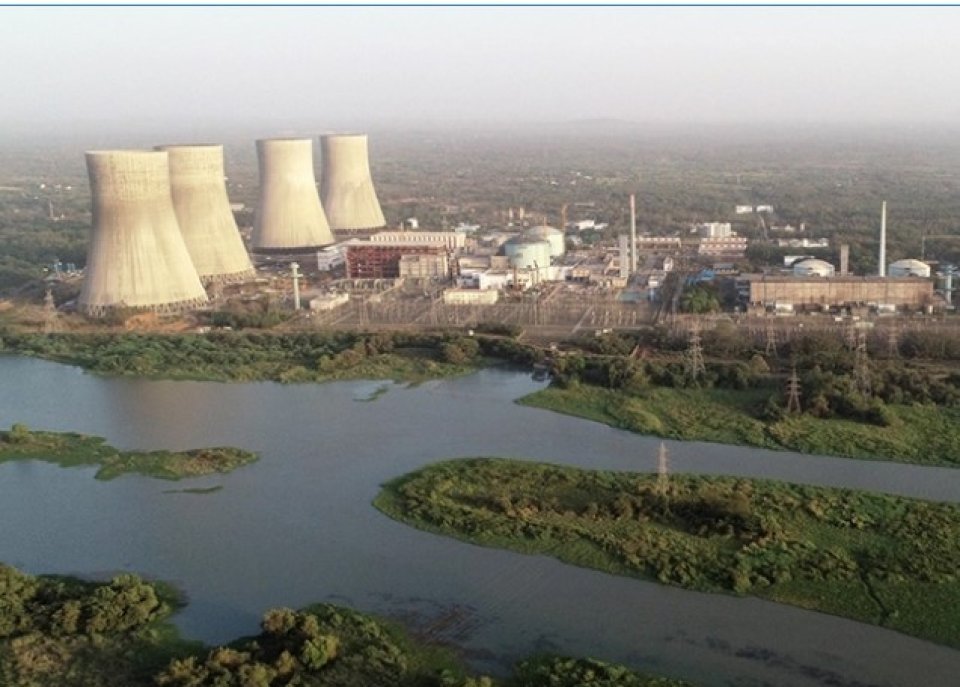
India’s expanding civilian nuclear energy programme is opening new avenues of cooperation with Central Asia, positioning uranium as a key pillar of a growing partnership focused on energy security, critical minerals and long-term economic engagement.
At the centre of this development is a landmark uranium supply agreement signed in 2026 between Kazakhstan’s national uranium producer Kazatomprom and India’s Department of Atomic Energy. Valued at more than USD 4 billion, the agreement ranks among the largest uranium supply contracts in Asia and reflects a deepening relationship between India and the resource-rich states of Central Asia.
More than a commercial transaction, the agreement underscores the increasing importance of energy cooperation in shaping India’s engagement with the region.
India Expands Its Nuclear Energy Vision
India’s economic growth continues to drive rising energy demand, prompting policymakers to pursue a diversified energy strategy that includes a significant expansion of civilian nuclear power.
Although nuclear energy currently contributes a relatively small share of India’s electricity generation, the sector is expected to play a larger role in supporting future industrial growth, energy security and emissions reduction goals.
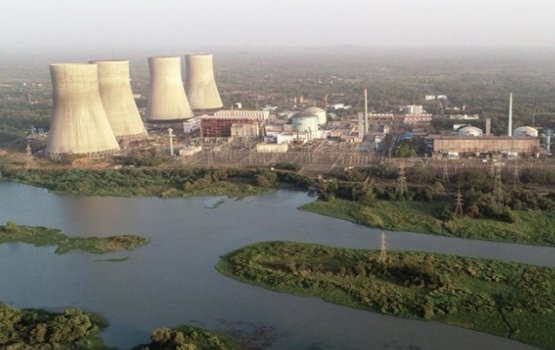
India currently operates 25 nuclear reactors with an installed capacity of approximately 8,880 MW, while several additional reactors are under construction. The government has also outlined an ambitious target of reaching 100 GW of nuclear capacity by 2047.
To support these ambitions, New Delhi has introduced major reforms through the Sustainable Harnessing and Advancement of Nuclear Energy for Transforming India (SHANTI) Act, which modernises the regulatory framework and encourages greater participation from private and foreign investors.
The reforms are expected to create more structured and predictable demand for uranium over the coming decades, increasing the importance of long-term international supply partnerships.
Kazakhstan Becomes a Key Energy Partner
Kazakhstan is well positioned to support India’s growing nuclear fuel requirements.
Home to approximately 14 percent of global uranium reserves, Kazakhstan remains the world’s largest uranium producer. In 2025, the country produced around 25,800 tonnes of uranium, accounting for a substantial share of global output.
Against this backdrop, the 2026 uranium agreement represents a significant milestone in bilateral relations.
The contract covers long-term deliveries of natural uranium concentrates from Kazatomprom to India’s Department of Atomic Energy and was approved by an overwhelming majority of the company’s shareholders.
For India, the agreement strengthens fuel security as the country accelerates the expansion of its civilian nuclear programme.
For Kazakhstan, the partnership broadens access to one of the world’s fastest-growing energy markets while complementing its existing international trade relationships across Asia and Europe.
The agreement also aligns with Kazakhstan’s broader objective of developing stable, long-term partnerships with a diverse range of global economic partners.
Uzbekistan Also Emerges as an Important Partner
Beyond Kazakhstan, Uzbekistan is becoming an increasingly important part of India’s uranium strategy.
A long-term uranium supply agreement signed in 2019 laid the foundation for cooperation between the two countries, and Uzbekistan has since accelerated plans to expand production.
The country aims to significantly increase uranium output by 2030 through new mining projects and partnerships involving international investors and technology providers.
As India continues to diversify its fuel sources, Uzbekistan’s growing production capacity is expected to further strengthen energy cooperation between South Asia and Central Asia.
Cooperation Extends Beyond Uranium
India’s interest in Central Asia increasingly extends beyond nuclear fuel.
The region possesses significant reserves of rare earth elements, lithium, copper, chromium, zinc and other critical minerals that are becoming increasingly important for advanced manufacturing, renewable energy technologies and strategic industries.
Recent India-Central Asia dialogues have highlighted growing interest in cooperation on critical minerals, resource exploration, processing and supply chains.
For India, these resources are essential to sustaining long-term industrial development and technological growth.
For Central Asian countries, India represents a large and expanding market that complements existing economic partnerships across Asia, Europe and other regions.
Connectivity Remains the Key Challenge
Despite growing economic opportunities, geography continues to present challenges for deeper India-Central Asia integration.
As a landlocked region, Central Asia depends on transit corridors to reach major international markets. Potential routes include connections through the Caspian region, Iran and other emerging transport networks linking Eurasia.
Efforts such as the International North-South Transport Corridor and the development of Iran’s Chabahar Port have received growing attention as mechanisms to strengthen connectivity between South Asia and Central Asia.
While logistical challenges remain, uranium possesses characteristics that make long-distance transportation commercially viable due to its high value and strategic importance.
As a result, energy cooperation may help accelerate broader discussions on trade corridors, infrastructure development and regional connectivity.
A Partnership Entering a New Phase
The scale and significance of the 2026 uranium agreement suggest that India-Central Asia relations are entering a more mature phase.
What began as resource trade is gradually evolving into a broader partnership encompassing energy security, critical minerals, infrastructure and economic cooperation.
For Central Asian countries, India offers access to one of the world’s fastest-growing major economies and a source of long-term demand for strategic resources.
For India, Central Asia provides access to critical materials needed to support industrial expansion, energy security and future technological development.
As connectivity initiatives continue to evolve, uranium may prove to be more than an energy commodity. It could become a catalyst for deeper economic integration between India and Central Asia, creating new opportunities for cooperation across Eurasia in the decades ahead. (Source: geopoliticalmonitor.com)