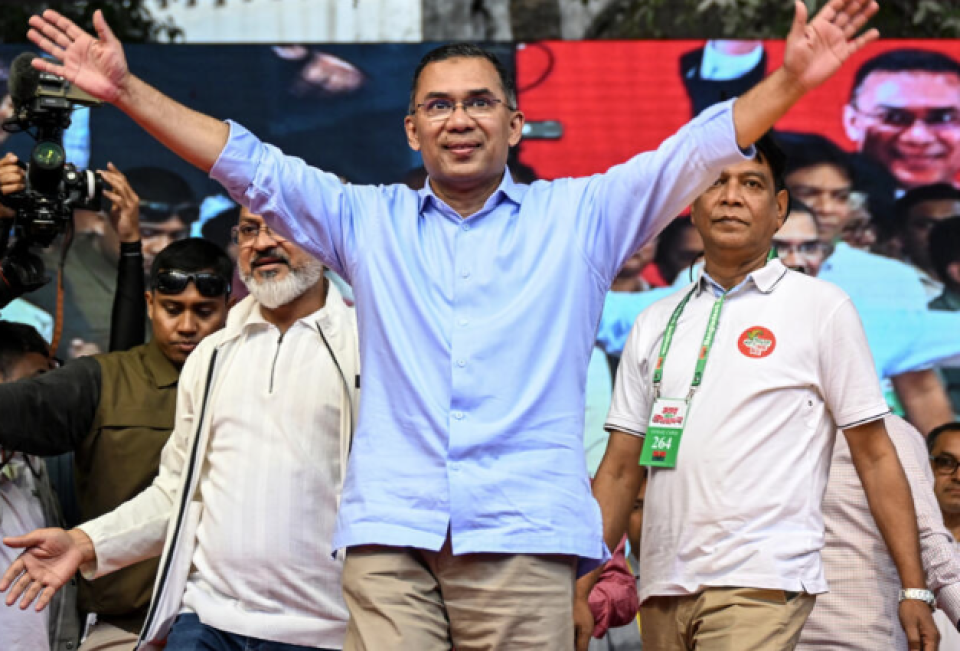

Bangladesh Nationalist Party (BNP) chief Tarique Rahman said Saturday that his government would prioritise the “interests of Bangladesh” in shaping foreign policy, in his first public remarks since the party secured a two-thirds majority in the national elections.
Speaking to local and foreign media at a press conference in Dhaka, Rahman — widely expected to assume office as Prime Minister — said decisions on international matters would be guided by national interest and legal frameworks.
Responding to questions regarding the extradition request for former Prime Minister Sheikh Hasina, Rahman said the issue would “depend on the legal process.” He added that matters concerning supporters of the Awami League facing legal cases would be handled under the “rule of law.”
Rahman adopted a measured tone during the interaction, which took place at the Intercontinental Hotel in Dhaka and was attended by senior BNP leaders and party activists following the February 12 vote.
Sources indicated that the BNP has requested the interim administration led by Chief Adviser Muhammad Yunus to invite Indian Prime Minister Narendra Modi to the upcoming swearing-in ceremony, expected on February 17 after formal parliamentary procedures are completed. While there is no established precedent in Bangladesh for inviting foreign leaders to such ceremonies, party officials said regional leaders may be considered.
Rahman also addressed regional cooperation, stating that Bangladesh would explore possibilities to revive the South Asian Association for Regional Cooperation through dialogue with member states.
On relations with China, Rahman described Beijing as a “development friend” but emphasised that all partnerships would be assessed through the lens of Bangladesh’s economic and strategic interests. He said projects under China’s Belt and Road Initiative would be evaluated based on their benefit to the national economy.
Addressing domestic priorities, Rahman identified economic stabilisation and improving law and order as immediate challenges. He accused the previous administration of politicising state institutions and pledged to strengthen governance and uphold legal equality.
In prepared remarks, Rahman called for national unity, urging democratic parties to work together despite political differences. He appealed to BNP leaders and supporters to maintain calm following the election victory and avoid retaliatory actions.
“Peace and order must be maintained at any cost. No wrongdoing or unlawful activity will be tolerated,” Rahman said, stressing that justice and the rule of law would apply equally to all citizens regardless of political affiliation, religion or ethnicity.
The centre-right BNP secured 209 seats in the 300-member parliament, granting it a two-thirds majority. Jamaat-e-Islami won 68 seats independently and 77 seats with allies, emerging as the second-largest political bloc. The Awami League did not contest the election, which recorded a voter turnout of 59.44 percent.