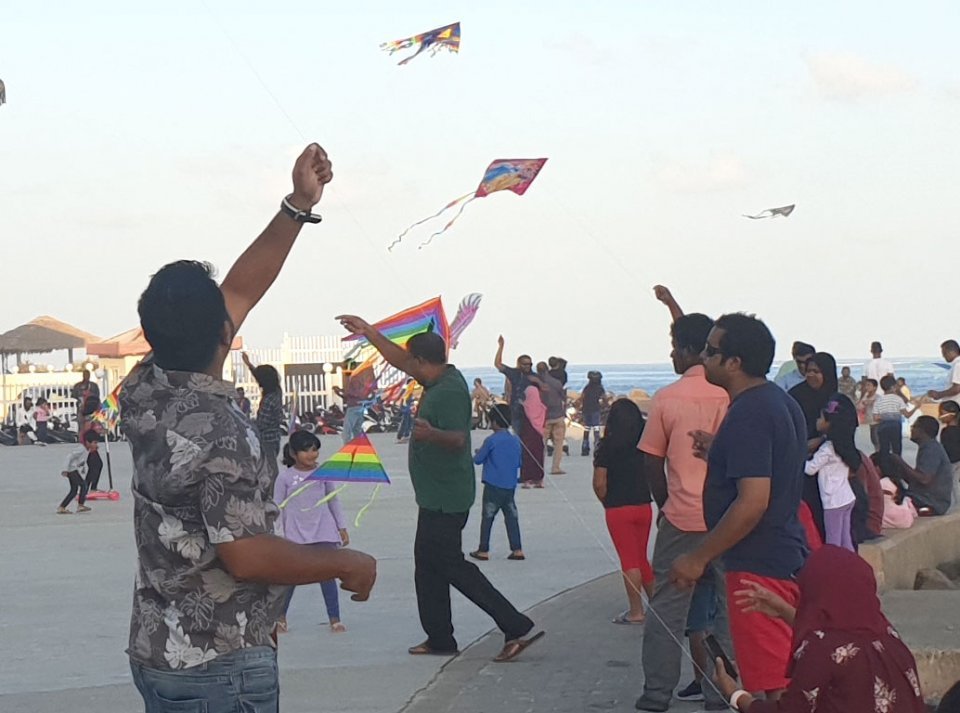

Malé, Maldives — The evening sky over Malé’s seaside square came alive with vibrant colors as families gathered along the shoreline to fly kites, creating a lively atmosphere of tradition, recreation and community spirit.
China’s Ambassador to the Maldives, Wang Lixin, shared his experience of witnessing the scene, noting the joy of families enjoying the ocean breeze together while colorful kites filled the sky.
According to the ambassador, the moment reminded him of Weifang, a city in China widely known as the world’s “Kite Capital”. Weifang boasts a kite-flying tradition dating back more than 2,400 years, and every April it hosts the internationally renowned Weifang International Kite Festival, which draws enthusiasts from over 50 countries.
At the festival, the skies are filled with an extraordinary variety of kites — from small traditional paper designs shaped like swallows to massive dragon kites stretching up to 200 metres long.
The ambassador expressed hope that Maldivian kite enthusiasts could one day visit Weifang to experience the festival firsthand. “Let’s fly our dreams together under the same blue sky,” he said.
A long-standing Maldivian pastime
Kite flying also holds a nostalgic place in Maldivian culture. Historically, flying handmade kites has been a common seaside pastime, especially in island communities where children and youth gathered on beaches and open grounds to enjoy the wind. Traditionally its called 'madi eruvun or gudi eruvun'.
Over time, the activity has evolved from a simple childhood hobby into a communal recreational tradition. In recent years, it has become particularly popular during the month of Ramadan, when families, children and friends often gather in the late afternoon to fly kites while waiting for the call to break the fast.
For many, the activity serves as a relaxing way to pass the final hours before iftar, turning beaches and open coastal areas into vibrant social spaces filled with laughter, conversation and colourful kites dancing across the evening sky.
The similarities between the centuries-old kite traditions of Weifang and the informal yet deeply rooted kite-flying culture in the Maldives highlight how simple recreational practices can connect communities across different parts of the world.
As the ambassador noted after witnessing the spectacle in Malé, the sight of kites soaring above the sea reflects not only a shared appreciation for wind and sky, but also a universal tradition of families coming together outdoors.