
India’s semiconductor manufacturing push is set to reach a major milestone in 2026, with four chip fabrication units expected to move to full-scale commercial production, Union Electronics and IT Minister Ashwini Vaishnaw said on Friday.
Speaking after the approval of the third tranche of the Electronics Component Manufacturing Scheme (ECMS), Vaishnaw said semiconductor facilities led by Tata Group, Micron, CG Semi and another unit will transition from pilot and trial phases to regular manufacturing next year.
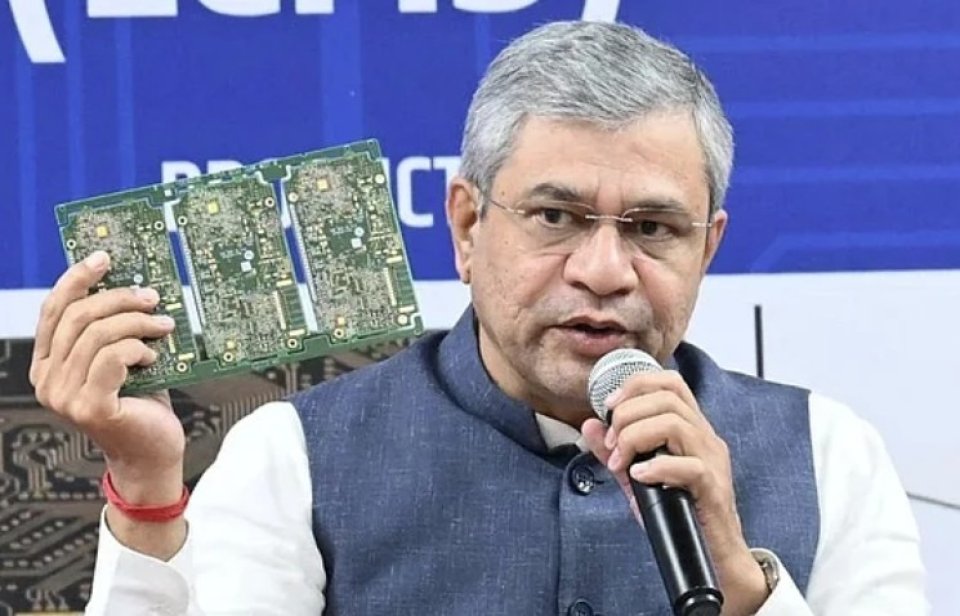
He said India is on track to meet a substantial share of its domestic demand and emerge as an exporter of key electronics components, including printed circuit boards (PCBs), laminates, lithium-ion cells, enclosures and optical transceivers. “The value chain is clearly taking root. By 2026, four semiconductor units will begin commercial production, marking a historic milestone,” he said.
The Ministry of Electronics and Information Technology has now approved 22 additional proposals under ECMS, with projected investments of ₹41,863 crore and estimated production worth ₹2.58 lakh crore. These projects are expected to generate nearly 33,800 direct jobs. This follows the earlier approval of 24 proposals involving investments of ₹12,704 crore.
In total, 46 projects have been cleared under the scheme, representing cumulative investments of ₹54,567 crore and projected production of ₹3.67 lakh crore, with employment opportunities for more than 50,700 people.
The approved proposals span 11 product segments with applications across mobile phones, telecom, consumer electronics, automotive, strategic electronics and IT hardware. These include bare components such as PCBs, capacitors, connectors, enclosures and lithium-ion cells; sub-assemblies like camera and display modules and optical transceivers; and supply-chain items including aluminium extrusion, anode materials and laminates.
Vaishnaw said strengthening electronics manufacturing is critical as India builds a comprehensive artificial intelligence ecosystem. He added that while progress is being made across application development and language models, strong emphasis is being placed on infrastructure through ECMS and the Semiconductor Mission.
He also said future approvals and incentives would be tied to clear plans for local sourcing, design capabilities and Six Sigma implementation, while calling for a more coordinated and outcome-focused approach to skilling initiatives. (Source: Outlookbusiness)