
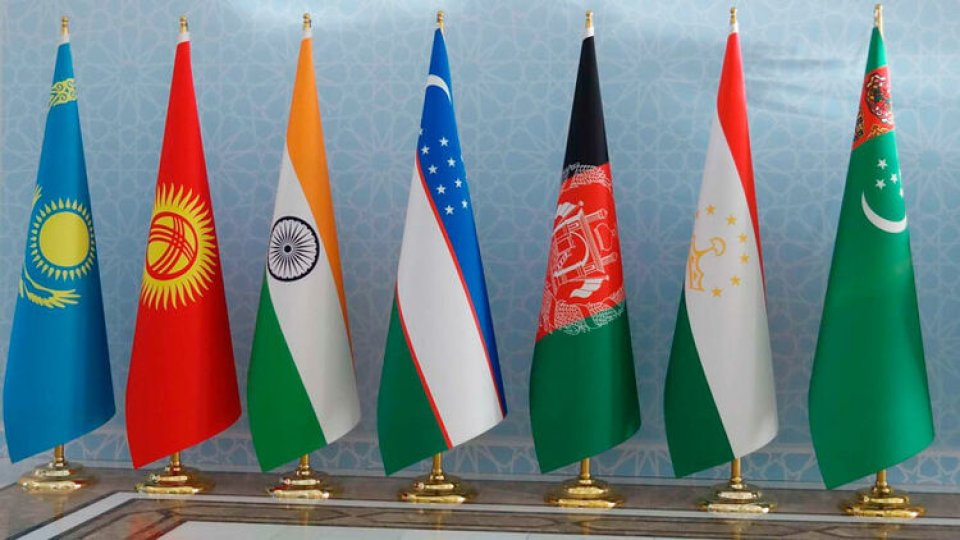
India is steadily strengthening its defence and security partnerships with the five Central Asian republics—Kazakhstan, Kyrgyzstan, Tajikistan, Turkmenistan, and Uzbekistan—driven by shared security concerns, historical linkages, and a common interest in regional stability. The expanding cooperation reflects mutual efforts to counter terrorism, extremism, transnational crime, cyber threats, and the strategic challenges posed by evolving regional dynamics.
A major focus of this engagement is the fight against terrorism and radicalisation. Central Asia’s proximity to Afghanistan presents security risks for both the region and India, prompting closer collaboration in counterterrorism dialogues, intelligence sharing, and joint training programmes. Central Asian states view India as a reliable partner in enhancing their security capabilities, while India sees engagement with its extended neighbourhood as vital to mitigating cross-border threats.
Non-traditional security challenges, particularly in cyberspace, have also become a key area of cooperation. As digital infrastructure grows across the region, both India and Central Asian countries face increasing cyber risks to critical systems. India-hosted initiatives, including the Strategic Cyber Exercise held in November 2025, have brought together cybersecurity agencies from all five republics, highlighting cooperation in cyber defence and emerging technologies such as artificial intelligence.
Geopolitics further underpins this partnership. Situated at the crossroads of major power competition, Central Asia offers India an opportunity to pursue a multivector foreign policy through bilateral ties and multilateral platforms such as the Shanghai Cooperation Organisation (SCO). Recent developments, including the first joint military exercise Birlik 2025 and regular national security advisers’ dialogues, have strengthened interoperability alongside established exercises such as KazInd, Khanjar, and Dustlik.
Connectivity and infrastructure projects add another layer to the security partnership. Initiatives such as the Ashgabat Agreement and the International North–South Transport Corridor (INSTC) aim to link landlocked Central Asia with South Asia, the Middle East, and Europe. India’s participation supports economic integration, reduces regional isolation, facilitates legitimate trade and logistics, and helps curb illicit trafficking networks.
Overall, enhanced defence cooperation is reinforcing trust, supporting collective efforts against terrorism, extremism, and cybercrime, and safeguarding economic and connectivity initiatives. Through sustained engagement, joint exercises, and strategic dialogue, India is contributing to a more balanced, multipolar security architecture in Central Asia—one that upholds regional sovereignty and promotes long-term peace and stability. (Source: Syndicate)