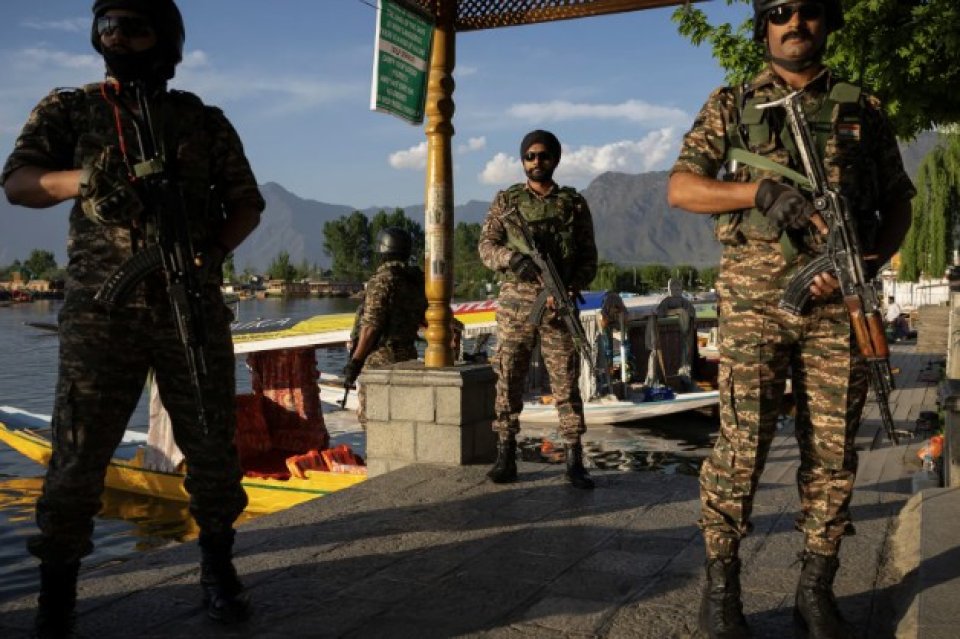
Nearly one year after the April 2025 attack in Pahalgam, Indian-administered Kashmir, the incident continues to shape regional security discourse, highlighting evolving militant tactics, contested geopolitical narratives, and emerging concerns around financing and recruitment.
The attack, which took place in the Baisaran Valley near Pahalgam, resulted in the deaths of more than two dozen civilians, many of them tourists, and left several others injured. As reported by multiple international outlets and open-source databases, the assault involved armed gunmen targeting civilians in a high-visibility tourist location.
Initial responsibility for the attack was claimed by The Resistance Front, which, as noted in several security analyses, is often described by Indian authorities and some international observers as a proxy linked to Lashkar-e-Taiba. However, the group later distanced itself from the claim, adding a layer of ambiguity that analysts say reflects a broader trend of deniable militant branding.
Alleged masterminds and operational networks
According to Indian investigative agencies, individuals such as Habib Thahir and Bilal Afzal were identified as key figures in planning or facilitating the attack. As reported by Indian media citing security sources, these individuals were believed to have links with cross-border militant networks.
Security assessments, as cited in regional reporting, suggest that operational coordination may have involved handlers outside Indian-administered territory. However, independent verification of these claims remains limited in the public domain, and such assertions continue to be part of a broader geopolitical contest between India and Pakistan.
Cross-border dimension and competing narratives
Indian officials have stated that elements based in Pakistan were involved in supporting or enabling the attack. As stated in official briefings and reported by Indian media, evidence such as intercepted communications and recovered materials pointed to cross-border linkages.
Pakistan, for its part, has consistently rejected allegations of state involvement in militant activities in Kashmir. As reported in international coverage of India-Pakistan relations, Islamabad maintains that it supports diplomatic engagement and denies backing armed groups targeting India.
This divergence reflects a longstanding pattern in India-Pakistan relations, where incidents in Kashmir are often interpreted through competing national security narratives.
Expanding militant ecosystem
Security studies and counterterrorism analyses suggest that the attack should also be viewed within the broader context of militant group evolution in the region. Groups such as Jaish-e-Mohammed have been cited in multiple reports as continuing to operate within a wider network of ideologically aligned organizations.
Some studies and intelligence-linked reporting have pointed to the emergence of auxiliary structures, including references to a women’s wing known as Jamaat-ul-Muminat, reportedly associated with recruitment and support roles. Analysts note that such developments, if substantiated, would reflect a shift toward diversified recruitment strategies, similar to patterns observed in other global conflict zones.
Financing trends: crypto and informal networks
One of the more notable aspects discussed in post-attack analyses is the changing nature of terror financing. As highlighted in global counterterrorism studies and financial monitoring reports, militant groups are increasingly exploring:
- Cryptocurrency channels for cross-border fund transfers
- Hybrid systems combining traditional hawala networks with digital tools
- Encrypted communication platforms for fundraising and coordination
While no publicly verified financial trail specific to the Pahalgam attack has been fully disclosed, experts suggest that such methods are becoming more common across multiple regions, complicating detection and enforcement.
The attack has also renewed attention on Pakistan’s position in global terrorism assessments such as the Institute for Economics and Peace’s Global Terrorism Index.
As reported in recent GTI publications, Pakistan continues to rank among countries significantly affected by terrorism, largely due to internal security challenges. At the same time, discussions around alleged cross-border linkages remain part of broader international debates, often shaped by differing political perspectives.
Changing dynamics in Kashmir
Analysts studying conflict trends in Kashmir suggest that the Pahalgam attack reflects several evolving characteristics:
- Increased use of proxy or rebranded groups to manage attribution
- Targeting of civilian and economic sectors, particularly tourism
- Blending of local and foreign operatives in operational structures
- Adaptation to surveillance environments through non-conventional communication tools
As noted in regional security studies, these shifts indicate a move toward more decentralized and media-sensitive forms of militancy.
One year on, the Pahalgam attack continues to be referenced in discussions on South Asian security and counterterrorism. While investigations and claims surrounding responsibility remain contested, the broader implications—ranging from evolving militant tactics to financial innovation—are widely acknowledged in policy and academic circles.
As suggested in multiple security analyses, addressing such threats will likely require enhanced regional cooperation, improved financial monitoring mechanisms, and sustained diplomatic engagement. In a region where security incidents often intersect with geopolitics, maintaining a balanced and evidence-based approach remains critical to long-term stability. (Source: news syndicate)