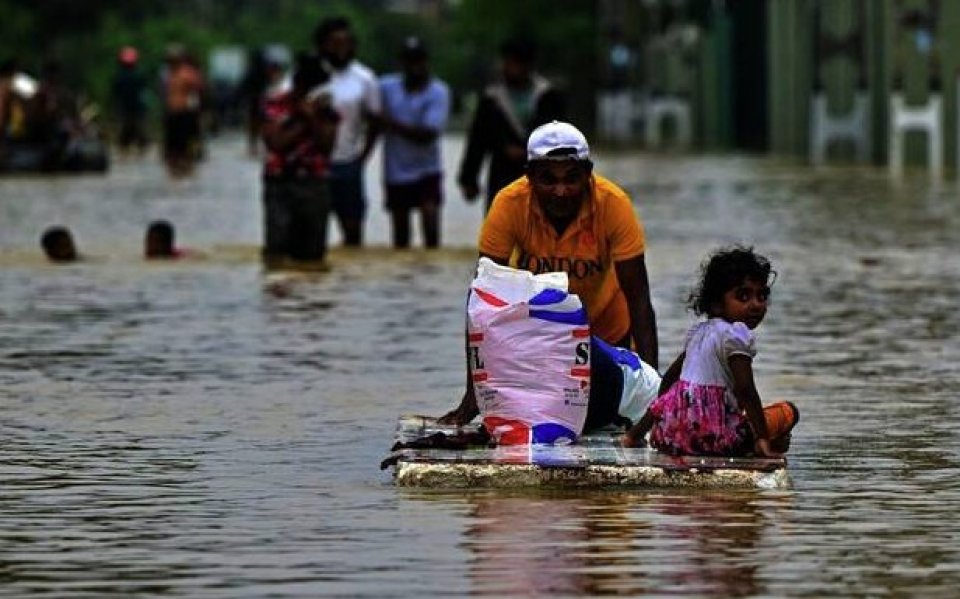

Sri Lanka is grappling with its most devastating flooding in decades after Cyclone Ditwah swept across the island, leaving widespread destruction and a rising humanitarian crisis.
According to the UN Office for the Coordination of Humanitarian Affairs (OCHA), 998,918 people across all 25 districts have been affected. At least 212 people have died, while 218 remain missing. More than 180,000 individuals from 51,000 families are currently sheltering in 1,094 government-run safe centres as rescue operations continue.
Widespread Destruction Across Multiple Districts
Cyclone Ditwah made landfall on 28 November before shifting back into the Bay of Bengal. The storm has triggered severe flooding not seen since the early 2000s.The worst-affected districts include Gampaha, Colombo, Puttalam, Mannar, Trincomalee and Batticaloa, while deadly landslides have struck the hill-country regions of Kandy, Badulla and Matale.
Initial assessments show that over 15,000 homes have been destroyed, with more than 200 roads impassable and at least 10 bridges damaged. Key sections of the railway network and national power grid have also been heavily impacted.
Flooding along the Kelani River, which cuts through Colombo and surrounding low-lying areas, continues to obstruct access and disrupt communication from affected communities.
Northern districts such as Jaffna are reporting severe disruptions to electricity, mobile networks and transport links, leaving some villages completely isolated. Access to clean water remains a significant concern, with several areas reporting little to no supply.
Health System Under Heavy Pressure
Sri Lanka’s fragile health sector is under extraordinary strain. Several hospitals remain flooded and are receiving only limited supplies, forcing critical patients to be airlifted to functioning facilities.
Response efforts are complicated by recurring landslides and the breach of several tank bunds, including the Mavilaaru bund, increasing risks in Trincomalee and Batticaloa.
Authorities are also warning of looming food insecurity as farmlands, storage facilities and supply routes have been severely damaged. Shortages and price hikes are anticipated in the coming weeks.
The World Health Organization (WHO) has cautioned that post-flood environments significantly heighten risks of vector-borne, food-borne and water-borne diseases. Communities have been urged to use safe drinking water, practice proper food hygiene and take precautions against mosquito bites.
UN Scales Up Emergency Response
The United Nations activated its emergency coordination mechanism on Sunday to strengthen support for the Sri Lankan government and humanitarian partners. Sector coordination has been mobilised across food security, health, WASH, education, protection, shelter and early recovery.
A multi-sector needs assessment is under way with national disaster authorities to identify the most urgent gaps.
“The UN in Sri Lanka is mobilising its teams across the system to support national rescue and early recovery efforts. We stand in solidarity with all affected communities,” said UN Resident Coordinator Marc-André Franche.
Despite challenging access conditions, UNICEF has delivered portable water supplies to 25 safety centres in Badulla, which had been cut off due to severe flooding and road damage.
India and Pakistan have also deployed emergency teams to support Sri Lanka’s armed forces in hard-hit areas.
Regional Impact Across South and Southeast Asia
Beyond Sri Lanka, heavy monsoon rains continue to affect neighbouring countries.In southern Thailand, severe flooding has impacted more than two million people, while nearly 25,000 people have been displaced in Malaysia. Weather authorities expect rainfall to gradually ease in the coming days.
In Indonesia, local media report at least 440 deaths from floods and landslides, with over 400 people missing, particularly in Sumatra, where thousands remain stranded without access to food and water. (Source: UN)