
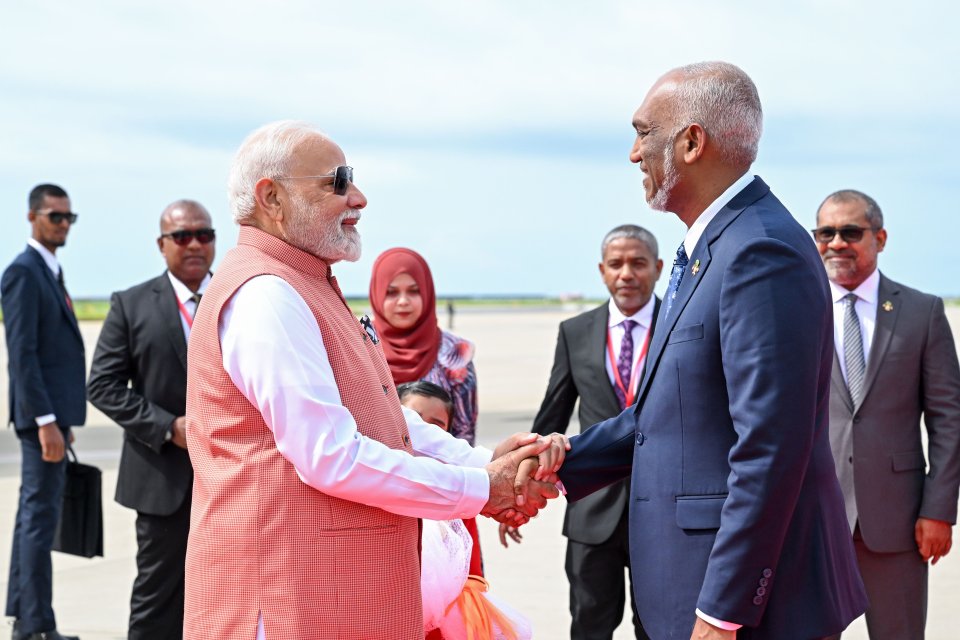

India has approved a ₹3,000 crore currency swap facility for the Maldives under the South Asian Association for Regional Cooperation (SAARC) framework, in a move aimed at supporting the country’s economy amid ongoing fiscal pressures.
An official confirmed that the facility was extended under the ‘Framework on Currency Swap Arrangement for SAARC Countries, 2024–2027’, with funds recently made available.
According to officials, the arrangement enables the Maldives to access foreign exchange during periods of liquidity stress, reducing reliance on commercial borrowing while supporting balance of payments and overall macroeconomic stability.
The Maldives’ Ministry of Foreign Affairs welcomed the support, stating that the facility aligns with the government’s broader efforts to strengthen economic resilience under President Mohamed Muizzu. The ministry described India’s assistance as a reflection of the longstanding partnership between the two countries.
The development comes at a time when the Maldives continues to face economic challenges. International credit agencies have highlighted vulnerabilities linked to external debt and fiscal pressures, while global developments — including tensions in West Asia — have contributed to rising energy costs and shifts in tourism flows.
Analysts note that such conditions may limit the country’s ability to access additional external financing in the short term.
India has, in recent years, provided multiple forms of financial support to the Maldives. This includes a $400 million currency swap facility extended in October 2024, which was rolled over twice, as well as the extension of two interest-free $50 million treasury bills in 2025.
During Indian Prime Minister Narendra Modi’s visit to Malé in July 2025, both countries also announced a $565 million line of credit focused on priority infrastructure projects, alongside measures to ease annual debt servicing obligations.
In 2024, Fitch Ratings downgraded the Maldives’ sovereign credit rating to CC, citing increased risks related to debt sustainability and structural economic challenges. (Source: News Syndicate)