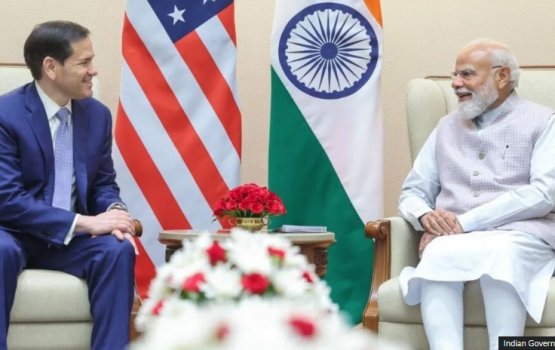
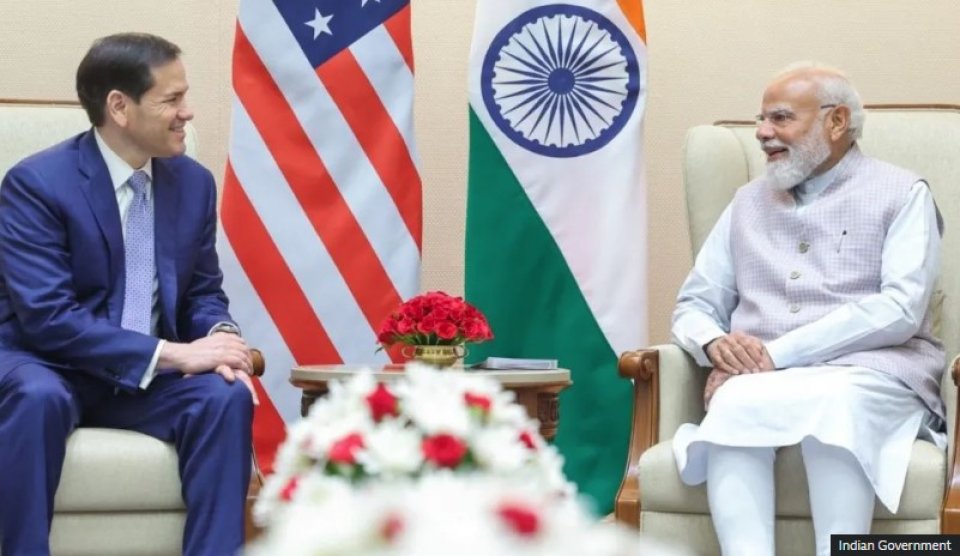
US Secretary of State Marco Rubio met Indian Prime Minister Narendra Modi in New Delhi on Saturday during a four-day visit to India, with energy security emerging as a key focus amid ongoing instability in the Middle East.
Rubio arrived in Kolkata earlier in the day before travelling to the Indian capital. His visit is also expected to include stops in Jaipur and Agra.
According to US officials, Rubio extended an invitation from US President Donald Trump for Modi to visit the White House. Modi later said discussions with Rubio included matters concerning “regional and global peace and security.”
The visit comes at a time when India is facing growing pressure over energy supplies due to tensions surrounding Iran and disruptions in the Strait of Hormuz — a critical global shipping route through which nearly 20 percent of the world’s oil and gas passes.
Shipping through the strait has been severely affected following escalating tensions involving Iran, Israel and the United States. The disruption has had significant implications for India, which imports more than 80 percent of its energy requirements, with a large portion traditionally routed through Hormuz.
Following the meeting, Rubio’s office said discussions also centred on the situation in the Middle East and efforts to stabilise global energy markets.
A US official said Rubio stressed that Washington would not allow Iran to “hold the global energy market hostage,” while also highlighting the potential for increased US energy exports to India.
Ahead of the visit, Rubio had indicated that the United States was prepared to supply India with “as much energy as they’ll buy,” signalling Washington’s interest in expanding energy ties with Delhi.
Analysts say India may consider increasing imports from the US, especially as it could also help address trade imbalances that have remained a point of concern for Trump.
The US goods trade deficit with India reportedly rose to USD 58.2 billion in 2025, marking a 27.1 percent increase compared to the previous year.
However, experts note that replacing current supply routes with US shipments would not be straightforward due to logistical and cost challenges.
Vineet Prakash, associate professor of US studies at Jawaharlal Nehru University in Delhi, said energy security was likely to dominate Rubio’s visit as tensions involving Iran were unlikely to ease soon.
“The US has already given a waiver to India on buying Russian oil, but Delhi is likely to push for more concessions,” Prakash said.
Rubio’s visit also comes amid lingering tensions between Washington and Delhi over trade negotiations and differing narratives surrounding last year’s brief India-Pakistan conflict.
While Trump has repeatedly claimed that he played a role in mediating peace between the two nuclear-armed neighbours, Indian officials have consistently maintained that Delhi does not accept third-party mediation in bilateral matters with Pakistan.
Trump’s recent praise for Pakistan army chief Asim Munir has also reportedly caused unease in Delhi. The US president had publicly referred to Munir as his “favourite field marshal.”
Analysts say Pakistan’s recent role in facilitating communication between Iran and the US has strengthened ties between Islamabad and Washington, particularly given Pakistan’s strategic position bordering Iran.
Prakash noted that while Pakistan remains an important regional partner for the US, discussions relating to Islamabad during Rubio’s India visit were unlikely to be addressed publicly.
“Any talks around Pakistan are likely to stay behind closed doors when Rubio meets leaders in Delhi,” he said. (Source: BBC)