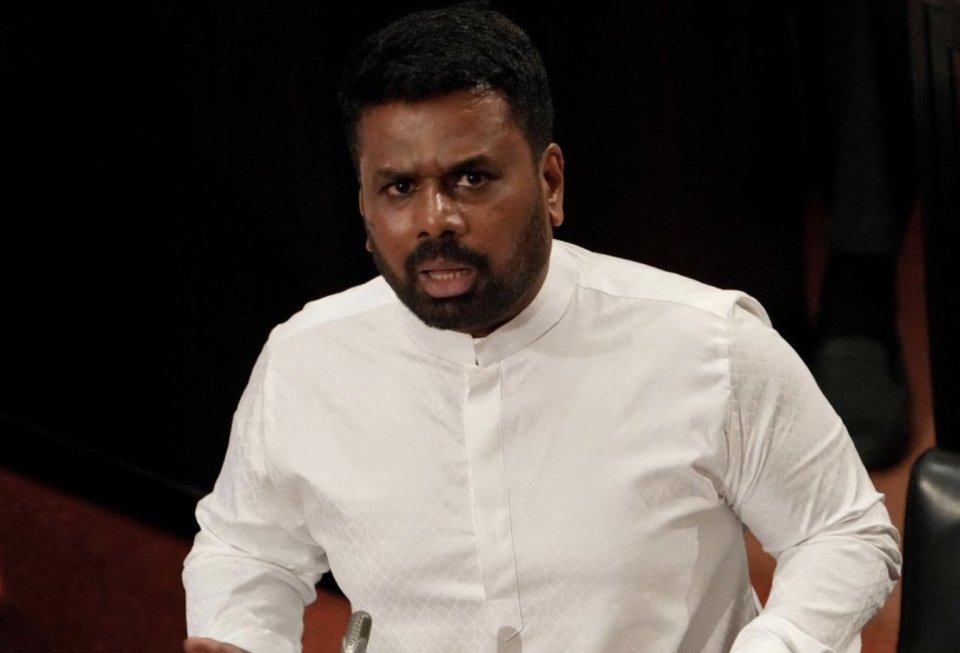
Sri Lanka has declined a request from the United States to allow two military aircraft to land in the country earlier this month, President Anura Kumara Dissanayake said, underscoring Colombo’s stance on maintaining neutrality amid rising regional tensions.
Addressing Parliament on Friday, the President said the request was made for two U.S. warplanes stationed in Djibouti to land at Mattala Rajapaksa International Airport on March 4 and 8. Both requests were rejected.
Dissanayake said the aircraft were reportedly carrying anti-ship missiles, adding that Sri Lanka would not permit its territory to be used in a way that could compromise its neutral position.
“We want to maintain our neutrality despite various pressures. The situation in the Middle East presents challenges, but we will do everything possible to remain neutral,” he told lawmakers.
The remarks come amid heightened tensions linked to the ongoing conflict involving Iran and its regional adversaries, which has raised security concerns across key maritime routes in the Indian Ocean.
The President’s statement also follows his recent meeting with U.S. Special Envoy for South and Central Asia Sergio Gor, during which both sides discussed maritime security, protection of sea lanes, and strengthening trade and economic cooperation within the Indo-Pacific region.
Separately, recent naval incidents have further complicated the regional security environment. Earlier this month, a U.S. strike targeted an Iranian naval vessel, Iris Dena, off Sri Lanka’s southern coast near Galle, reportedly killing dozens of sailors. The vessel had been returning from a naval exercise in India.
Days later, another Iranian ship, Iris Bushehr, requested entry to Colombo Port with more than 200 crew members on board. Sri Lankan authorities redirected the vessel to the eastern port of Trincomalee, while a number of sailors were accommodated at naval facilities near Colombo.
Sri Lanka’s response reflects its broader foreign policy approach of balancing relations with major powers while avoiding direct involvement in escalating geopolitical conflicts in the region. (Source: The Hindu)