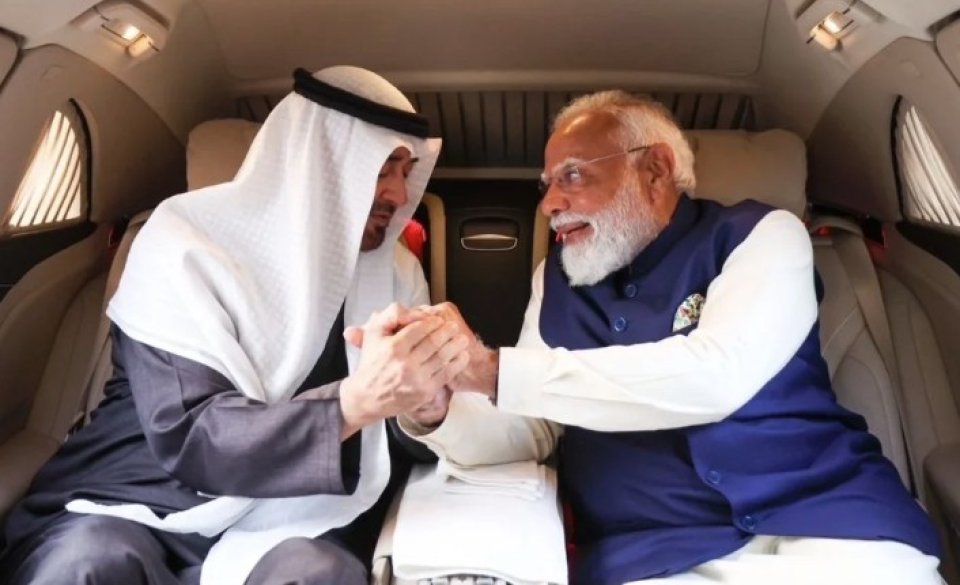
India and the United Arab Emirates have agreed to significantly expand their defence, energy and trade cooperation, including collaboration in the nuclear sector, following high-level talks held in New Delhi on Monday.
The agreement was concluded during a brief visit by Mohamed bin Zayed Al Nahyan, who met with Indian Prime Minister Narendra Modi. As part of the broader package of understandings, India signed a US$3 billion liquefied natural gas (LNG) purchase agreement, making it the UAE’s largest LNG customer.
According to officials, the deal also covers enhanced cooperation in nuclear energy, including the development and deployment of large nuclear reactors, as well as collaboration on nuclear safety and regulatory standards. Both sides also set an ambitious target of doubling bilateral trade to US$200 billion by 2032, underscoring the growing economic depth of the partnership.
During the talks, Modi and Mohamed bin Zayed discussed a range of regional and international issues, including the situations in Yemen, Gaza, and Iran, reflecting shared concerns over regional stability.
Regional context and shifting alignments
The India–UAE agreement comes amid evolving defence and diplomatic alignments across the Middle East and South Asia. Recent months have seen increased defence cooperation between Pakistan and Saudi Arabia, including the signing of a defence agreement and negotiations over arms and aircraft sales. These developments have drawn attention to emerging military and strategic partnerships in the region.
Tensions between India and Pakistan also remain a backdrop to regional dynamics. Following a militant attack in Kashmir’s Pahalgam earlier this year, the two countries were briefly locked in their most serious military confrontation in decades. Since then, Pakistan has sought to leverage its defence industry, including exports of the JF-17 Thunder fighter jet, to expand its footprint in Middle Eastern and African markets.
Against this backdrop, India’s growing defence ties with the UAE have been interpreted by some commentators in India as a strategic counterweight to Pakistan’s expanding defence outreach. However, Indian officials have downplayed any suggestion that the agreement is directed at a third country.
Official positions
A joint statement issued after the talks highlighted the momentum generated by regular exchanges between defence and security officials, as well as joint military exercises. The two leaders also reaffirmed their commitment to combating “terrorism in all its forms, including cross-border terrorism.”
Addressing questions on whether the deepening defence partnership could draw India into potential conflicts in the Gulf, Indian Foreign Secretary Vikram Misri said the initiative should be seen as a natural progression of existing cooperation.
“This is aimed at working towards a framework agreement for a Strategic Defence Partnership,” Misri said. “It represents an evolution of the already substantial defence ties between India and the UAE, rather than a response to any specific regional development or a signal of intent to become involved in hypothetical future conflicts.”
The latest agreements further consolidate the India–UAE strategic partnership, which has steadily expanded over the past decade to encompass trade, energy, defence, technology and people-to-people ties. (Source: middleeasteye)